The Smartphone Principle: Why Broadcast Monitoring Deserves a Second Look
August 19, 2026
As seen in InBroadcast
By Simen K. Frostad, Chairman of Bridge Technologies.
It is a cliché so obvious it barely needs saying: mobile phones have changed the world. But whilst many of those changes are well documented – how we communicate, navigate, shop, and date – some are more subtle. And one of the subtlest is how we evaluate the products we buy.

Despite still being called phones, the phone feature is a fraction of its functionality. When we choose a flagship handset, we rarely compare call quality. We use cameras, processors, displays, and ecosystems. We understand that the device in our pocket is not a phone with extras. It is a computing platform that happens to make calls.
Oddly, that mindset shift has not fully carried over into broadcast. There remains a persistent assumption that specialist boxes doing specialist things represent best-in-class. Waveform monitoring? A dedicated box. Network analysis? Another box. Audio diagnostics? Yet another. The logic seems to be that depth requires specialisation, and specialisation requires hardware.
As a result, monitoring manufacturers still divide their offerings. One box handles broad, background ‘monitoring by exception’ – checking that streams are present and compliant, alerting when something breaks. When you need to drill down, you switch to another box and another interface. When camera painters or audio engineers need production tools, you add more boxes, more screens, more cabling, more training.
Imagine applying that logic to smartphones. A device for calls. A separate device for photos. Another for GPS. Another for browsing. A fifth for music. Then imagine carrying them all in your pocket or finding a useful way to get them to talk to each other without fifteen different cables and connectors.
It sounds absurd. Yet that is precisely the model many broadcast facilities still accept.
The Problem with Piecemeal
Customers looking for one specific thing tend to shop for that one specific thing. When they see it referenced as just one part of a wider feature set, they often zone out. It’s referred to as our ‘Reticular Activating System’ – we fixate on a perceived need and our RAS filters out everything else, focusing our attention on the information that reinforces what we believe we need.
The problem is that we don’t always fully understand our own needs. We can’t always anticipate the way future strategy will be shaped by the tools we have access to. We may have limited understanding of the interconnectedness of various functions. The best innovations rarely came from asking customers what they need, they come from anticipating it. (You may have heard the famous quote, attributed to Henry Ford: “if we asked people what they wanted, they’d have said a faster horse”).
Broadcasters are thus often guilty of buying one piece of equipment, only to find themselves locked into a perpetual cycle of adding more as their understanding grows. Eventually, they are burdened with a sprawling, unwieldy server room full of racks that do not gel well, require workarounds, and disrupt smooth workflows. In the meantime, their needs, market and strategy have fundamentally morphed and evolved.
A Different Approach
So, what do customers think they need? Continuous monitoring? Alerting by exception? Root Cause Analysis? Remote production support? PTP troubleshooting? Operations Centre Visibility? Production monitoring? They are all specific functionalities. They could all be given their own devoted box and product name. They could be treated by manufacturers as an ‘ecosystem’ of activities that you build out by adding yet more units to the rack. All the time adding expense.
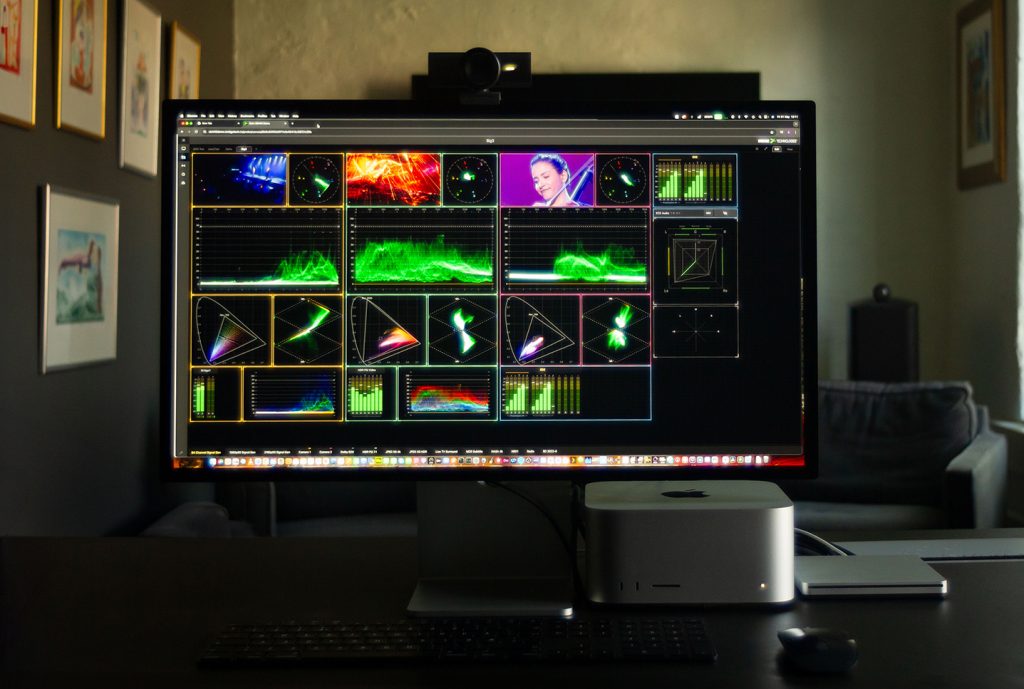
And yet, these elements are all inherently interrelated. They trade on the same understanding of IP behaviour. They leverage the same processing power and infrastructure. There really isn’t any good reason why one appliance shouldn’t handle continuous monitoring, deep packet analysis, a full suite of camera painting tools, an extensive audio control panel, AV sync measurement, signal generation – even speaker control.
And by doing this all-in-one box, that would mean everything could be delivered through a single browser window using a common interface – one flexible workspace, one system to get to grips with. Moreover, it would be accessible to multiple users simultaneously, from anywhere in the world, in real time. It would provide everything a broadcaster needs now, and everything they will need in the future – especially as their operations evolve to remote, distributed and live workflows.
With IP, manufacturers have the opportunity to start thinking in ways which leverage the standard’s common underpinning base, delivering holistic systems packed with functionality. The time and effort spent building boxes and making them talk to each other can instead be devoted to refining the scope, usability and usefulness of the tools themselves. All whilst saving space, cabling, energy use and truck-roll weight.
Ring, ring, the future of broadcast called
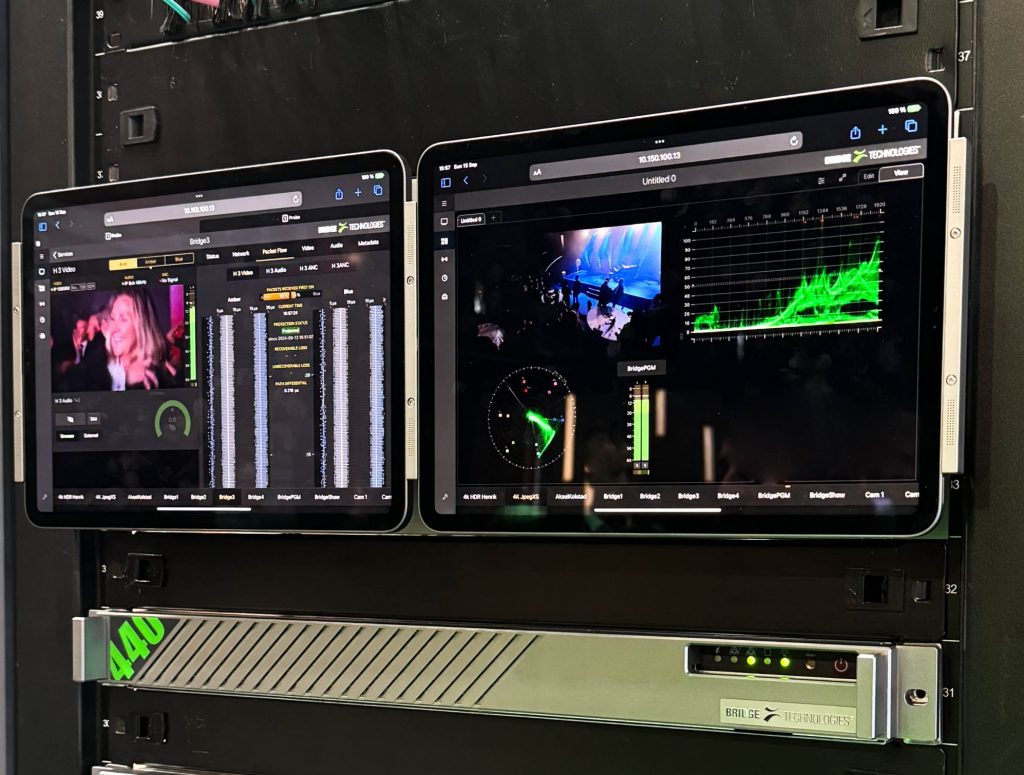
It’s exactly this philosophy which is deployed within Bridge Technologies’ VB440. No need to invest in one box to be the broadcast ‘radar’ – continuous monitoring designed to identify problems quickly – and then having to buy another box to become the ‘microscope’. With the VB440, both are present. When an issue is detected, engineers can move directly from alarm to root-cause without switching to a separate instrument.
And then, for good measure, the VB440 adds in a host of production tools, for camera painters, audio engineers, producers and every member of the studio floor. No additional boxes. No additional interfaces. No additional training. Just one appliance that does what used to require a rack of dedicated hardware.
It’s the smartphone principle applied to broadcast. And as manufactures across the industry move towards adopting a similar mindset, we can expect exactly the same kind of revolutionary change.