Broadcast’s New Reality: From Specialists to Specialistic
September 30, 2026
As seen online – InBroadcast.com
Specialist versus Specialistic
One of the unexpected joys of working in a multilingual office is the creative license it grants to expression. Words get borrowed, bent, and occasionally invented entirely. Recently, a colleague – searching for a word that didn’t quite exist – coined ‘specialistic’. It has since become a regular part of our vocabulary, and we think it deserves wider currency.
A specialist is someone who has trained extensively to perform a single, high-level function. A specialistic function, by contrast, is a single, high-level function that can be performed by someone not necessarily trained specifically for it. It is the task itself that is specialistic, not the person doing it.
This distinction matters because it describes exactly what is happening in broadcast engineering. Functions are becoming more complex, more technical, and more demanding. Yet at the same time, engineers are expected to cover more ground, wear more hats, and manage broader sections of the chain than ever before. They have been asked to turn from specialists into workers who need to perform specialistic functions – without any reduction in quality.
The Tools of the Trade
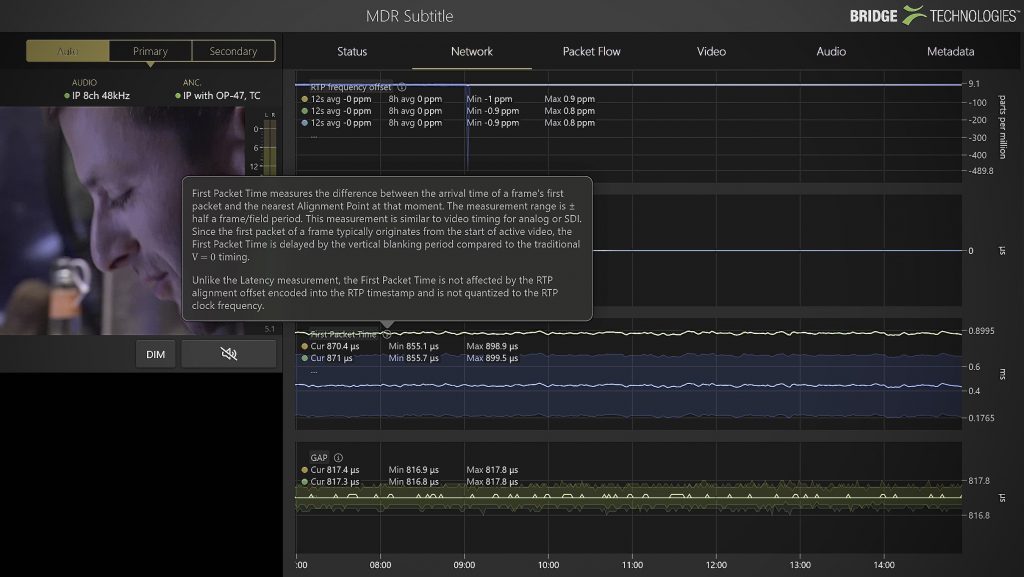
This is precisely the direction in which Bridge products are evolving. The VB440 contains functions for camera painters, audio engineers, network technicians, and producers alike – all accessible through a single browser interface. It does not demand that each user be a specialist in every discipline. It provides specialistic tools: waveform scopes, audio meters, packet analysers, and AVA sync measurement, all designed to be understood and used by professionals who may not have dedicated training in each individual function.
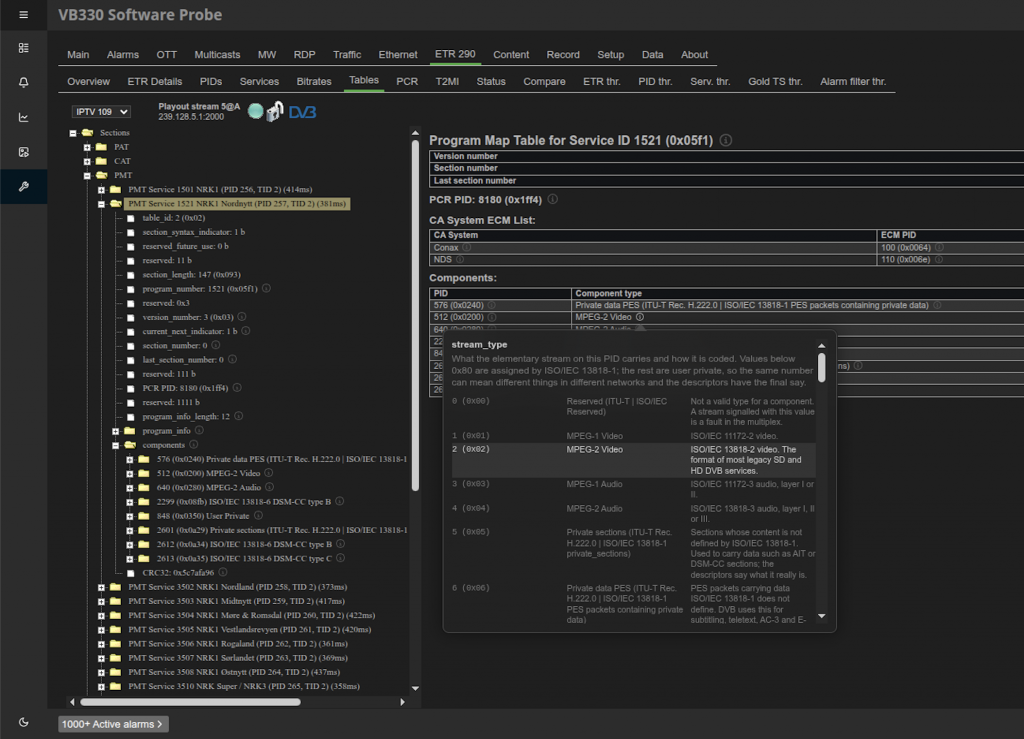
Similarly, the VB330 has expanded far beyond its original monitoring purpose. It now incorporates recording and playout capabilities, turning a probe that once watched streams into a tool that can capture, store, analyse, and regenerate them. These are specialistic functions – advanced activities made accessible through intuitive design and intelligent workflow.
The little details matter too. Dynamic explanatory hovercards show exactly what each metric indicates and the formula used to calculate it across all of our distribution probes. That means for users who aren’t immediately au fait with a particular parameter, but have a broad understanding of the underpinning principles, the readouts can still make intuitive sense. We had particularly strong feedback from an American University who implemented Bridge probes for their university sports broadcasts: broadcasts which were in part produced by their own media and broadcast students. Dynamic Explanatory Hovercards gave the opportunity for those students to learn by doing – gaining understanding not only within their own particular area of focus, but across the full chain of broadcast functions.
Similarly, our GUI and alarming are all designed to be inclusive, and not the limited preserve of those with expert understanding – though they deliver expert-level insight. Alarming systems direct attention where needed, not everywhere at once. Visual readouts in the form of waveforms and waterfalls – combined with an interface designed to make sense on a cognitive-flow level – all make things immediately understandable. These are not dumbing down. They are making complexity surfaceable, allowing a broader range of professionals to perform high-level functions without years of specialised training.
A Better Kind of Jack
Calling someone a Jack of all trades has historically been something of an insult. The full phrase, often falsely ascribed to Shakespeare, is ‘Jack of all trades, master of none’ – damning with faint praise. But there is a lesser-known continuation: “but oftentimes better than a master of one.”
Because there is no inherent rule that a Jack compromises on quality. They can display the same levels of intelligence, understanding, diligence, and focus as any specialist. What they add is flexibility, adaptability, joined-up thinking, and an ability to accommodate the bigger picture. They see how systems connect because they have to work across them.
And when you put the right tools in their hands – not tools designed only for specialists, but specialistic tools – that is where success really happens. Best-in-class functionality, made more accessible. Easier to use. Not limited to one function per box, but leveraging underlying hardware more effectively to do more with less.
The broadcast industry has changed. The lines between production and distribution, engineering and creative, SDI and IP, have blurred. The people who thrive in this environment are not necessarily the ones who have trained for a single discipline their entire careers. They are the ones who can move between domains, who understand the broader picture, and who have the tools to execute high-level functions across multiple areas.
That is the future of broadcast. And it is specialistic.