Dogged, Not Dogmatic: Why you should stick to your guns but keep your target open
October 21, 2026
As seen in InBroadcast OCt/NOV issue
There is a difference between conviction and stubbornness, as any parent of a toddler will tell you. But it’s not just the qualities of each that differ, it’s their outcomes: one is a path to success. The other… not so much.
Every technology business needs a guiding vision – a belief about where the industry is heading that is strong enough to survive the skepticism of the present. But cling to anything too tightly and it’s apt to slip through your hands. In business, the destination might be clear, but the route rarely is.
At Bridge Technologies, when we started arguing that broadcast production would migrate to IP twenty-two years ago, the industry was largely unconvinced. SDI worked. It was understood. Why fix what wasn’t broken? But we were dogged. We kept making the case because we believed the case was right.
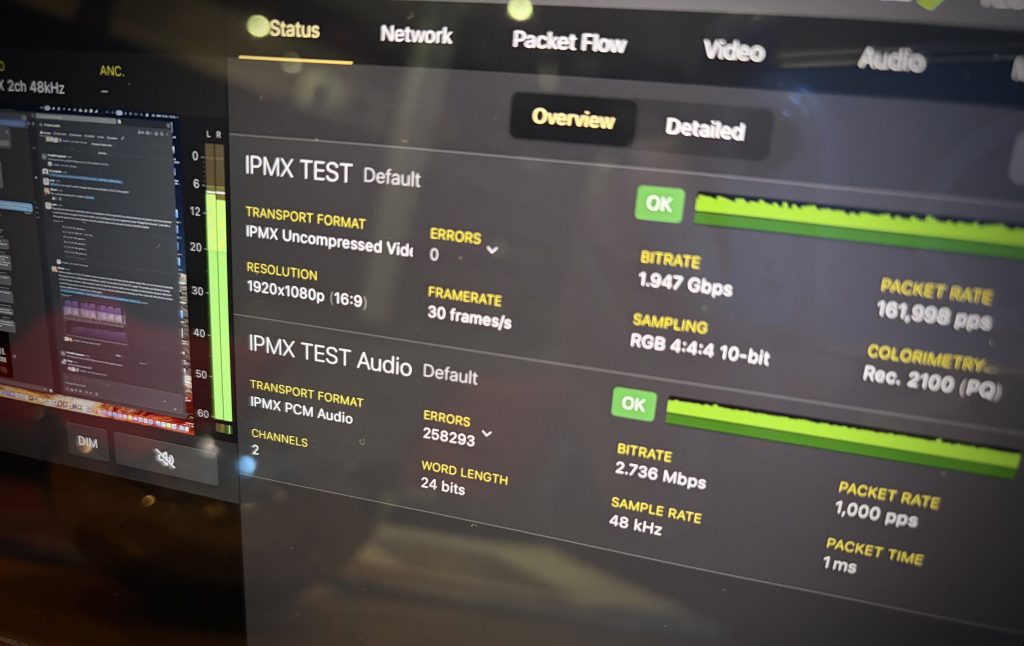
How to take the first steps on that path? ST 2110 seemed the obvious route. And it remains a crucial one. But we knew that as the market matured, more tracks through the forest would appear. SRT, for instance. And as the ProAV market has exploded, IMPX. And we have happily integrated each of them into our probe, knowing full well that many roads lead to Rome.
Because the vision was IP. But the expression of that vision was never meant to be singular.
Software futures
This same principle shaped how we approached software. The VB440 was always developed as a software technology, because it was readily apparent that software was where the industry was heading. But whilst we championed that in our development strategy, we were not about to force it onto a market that had not yet developed the resources to embrace it.
Which means we initially launched the VB440 on an appliance. Not because the software was tied to something a specific hardware need: sure, the VB440 appliance is a nice, highly reliable, high density 1RU server that performs the work of dozens, but ultimately it’s just a commercial box. But the reason we launched an appliance was because it provided an easy, convenient, and reliable method for deploying the VB440’s powerful functionality in facilities that didn’t necessarily have the IT infrastructure to coordinate software deployments themselves. The appliance was a delivery mechanism, not a constraint. Software was always the base – we just had to wait for the market to be ready.
And now, it is. Broadcasters have built sophisticated IT operations. Virtualisation is normal. Containerisation is understood. Orchestration platforms are the talk of conference halls on both sides of the Atlantic. The software foundation we laid years ago is now meeting an infrastructure that can finally take full advantage of its potential.
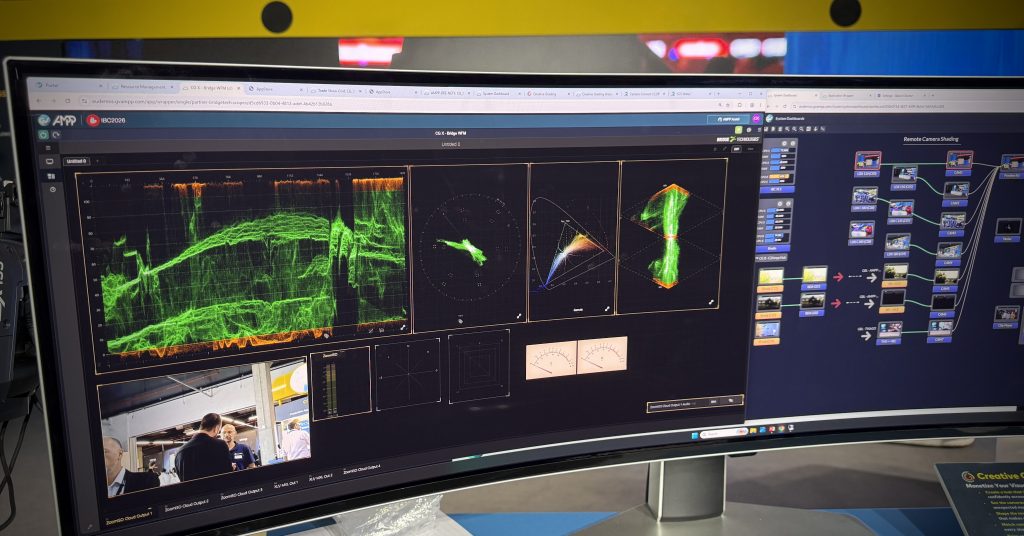
This means Bridge can pursue multiple directions simultaneously. The VB440 is available as a software product for broadcasters to deploy directly onto their own enterprise infrastructure – licensable so that it can be expanded in terms of access and capacity when needed. Or it can participate in MXL-driven initiatives, making spin-up scopes and AV analysis tools available through platforms like Grass Valley AMPP on an ad-hoc basis.
Whether a private, on-prem COTS server, an off-site datacentre or cloud-native deployment services, we are not tied to one deployment model. We are tied only to delivering a suite of best-in-class production tools. The question is not ‘what is the VB440?’ but ‘how would you like to use it?’.
Vision, but not tunnel vision
This is the lesson for any technology business navigating a period of rapid change: a vision is essential. Without it, you drift. You chase trends rather than shaping them. You react rather than lead. But a vision held too tightly becomes a liability. It blinds you to alternative paths, to new standards, to emerging markets that might benefit from what you have built – if only you are willing to adapt how it is delivered.
Ultimately, being dogged means holding firm to the belief that things can be better. Being dogmatic means refusing to see there is more than one path to ‘better’. The trick is to keep your eyes on the horizon while your feet remain flexible. The terrain will change, but your convictions shouldn’t.